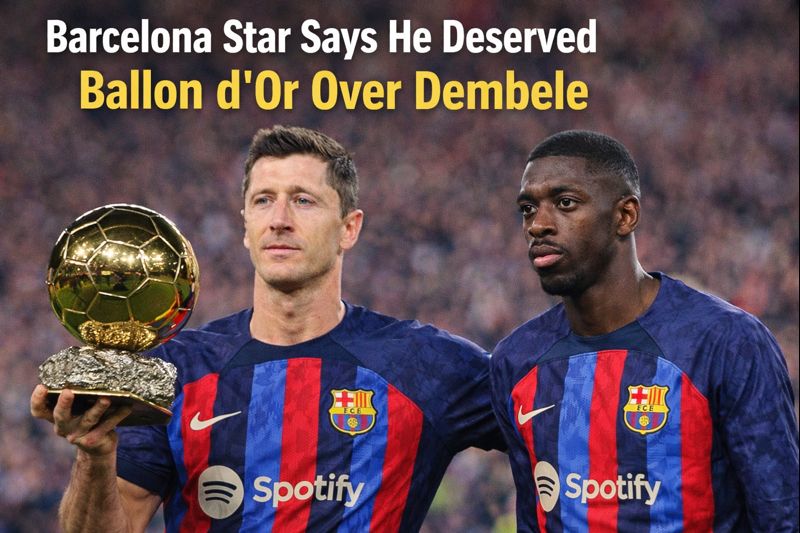
Barcelona Star Says He Deserved Ballon d’Or Over Dembele
Barcelona’s Brazilian winger has sparked controversy surrounding football’s most prestigious individual honor. Barcelona star Raphinha’s comments question whether Champions League triumph should outweigh complete season performance. The debate reignites discussions about voting criteria and what truly defines excellence. Meanwhile, rival manager endorsements add credibility to the Barcelona star claims. Fifth-place finishes rarely generate such passionate responses from players. However, statistical comparisons reveal legitimate grounds for questioning final rankings.
Statistical Comparison Reveals Narrow Margins
Both players delivered exceptional campaigns across their respective leagues. Dembele’s PSG treble included historic Champions League glory for the Parisian club. His 35 goals and 16 assists came across 53 appearances. Additionally, he topped Ligue 1 scoring charts with 21 goals.
Conversely, the Barcelona winger recorded comparable numbers with different trophy emphasis. Specifically, he contributed 34 goals and 26 assists in 57 matches. His assist tally notably exceeded Dembele’s by ten. Moreover, he secured three domestic Spanish trophies including LaLiga.
Champions League performance created the crucial differentiation between candidates. PSG’s European conquest provided Dembele undeniable advantage in voting. Meanwhile, Barcelona reached only semi-final stage despite strong individual performances. Therefore, continental success heavily influenced final rankings.
Player’s Perspective on Award Methodology
The Brazilian addressed ranking disappointment through detailed SofaScore interview. He acknowledged French opponent’s accomplishments while defending personal achievements. His comments highlighted perceived imbalance in evaluation criteria.
“I think I deserved to be first in the Ballon D’Or for the titles I won, numbers I achieved and everything I contributed. It’s mainly an award based on a single competition (UCL), and Dembélé deserved it too, but if we talk about the overall season, I think I deserved to win yes.”
This statement reveals fundamental disagreement about assessment priorities. He suggests excessive Champions League weighting overshadows complete seasonal contributions. Furthermore, his domestic treble receives insufficient recognition comparatively. Consequently, debate emerges about whether single competition should dominate voting.
Rival Manager’s Unexpected Endorsement
Atletico Madrid’s Diego Simeone provided surprising external validation. His comments followed December league encounter where Barcelona prevailed 3-1. The Brazilian scored during that convincing victory. Simeone’s post-match praise carried significant weight given competitive rivalry.
“Raphinha is an incredible player. He can play everywhere. As a winger, as a midfielder, as a striker, or even as a wing-back. He can score, can create, he presses and runs. I don’t know how he didn’t win the Ballon d’Or. For me, I would choose him always.”
Opposing manager endorsements rarely occur with such enthusiasm. Simeone emphasized versatility alongside statistical excellence. His perspective adds objectivity beyond club loyalty considerations. Moreover, tactical expert recognition validates complete game contributions. Therefore, professional peer assessments support Brazilian’s self-evaluation.
Barcelona’s Double Top-Five Representation
Lamine Yamal’s second-place finish demonstrated Catalan club’s exceptional season. The Spanish prodigy continues drawing Lionel Messi comparisons. His youth combined with achievement level creates unprecedented hype. Additionally, Barcelona claimed two top-five positions despite missing top honor.
This dual representation highlights team success translating into individual recognition. However, it also reveals vote-splitting potentially affecting final outcomes. Multiple strong candidates from single club may dilute support. Consequently, PSG’s singular elite candidate faced less internal competition.
The teenager’s runner-up position at his age remains historically significant. His trajectory suggests future Ballon d’Or victories seem inevitable. Meanwhile, established stars like the Brazilian may have limited remaining opportunities.
Voting Criteria Debate Intensifies
This controversy reignites perpetual discussions about award methodology. Journalists’ votes determine outcomes, creating subjective element. Regional biases and recency effects potentially influence decisions. Furthermore, Champions League prominence reflects European football’s commercial priorities.
Alternative perspectives argue knockout competition pressure exceeds league consistency demands. Single-elimination formats test mental fortitude differently than season-long campaigns. Moreover, European nights carry unique historical prestige. Therefore, continental success weighting contains legitimate justification.
However, domestic dominance requiring sustained excellence deserves proportionate credit. LaLiga’s competitive depth challenges differ from Ligue 1’s structure. Additionally, multiple trophy campaigns demonstrate versatility across competitions. Consequently, holistic seasonal assessment merits stronger consideration.
Historical Context of Fifth-Place Finishes
Ranking fifth typically indicates elite status without genuine contention. However, recent years show tighter voting margins across top candidates. Statistical gaps between positions narrow as player quality increases globally. Furthermore, fifth position historically includes world-class performers.
This particular case stands out given statistical proximity to winners. The margins suggest legitimate debate rather than clear hierarchies. Additionally, managerial endorsements from rivals rarely accompany fifth-place finishes. Therefore, this ranking controversy carries unusual credibility.
Future Ballon d’Or discussions will likely reference this season’s debate. Voting transparency improvements may result from such high-profile disagreements. Moreover, criteria clarification could address perceived imbalances.
Expert Analysis on Award Politics
According to football analysts, Ballon d’Or outcomes blend merit with narrative factors. Champions League victories create compelling stories for voters. Plus, PSG’s historic first European title carried immense symbolic weight. Media coverage amplifies certain achievements over others systematically.
The Brazilian’s case demonstrates excellent seasons sometimes lack defining moments. Consistency across competitions may lose to spectacular knockout performances. Therefore, players must consider how achievements translate into voter narratives. Strategic team success timing influences individual recognition significantly.
This analysis examines the 2025 Ballon d’Or controversy involving Barcelona’s Brazilian winger, voting criteria debates, and comparative season achievements. All quotes derive from verified interviews and official sources.